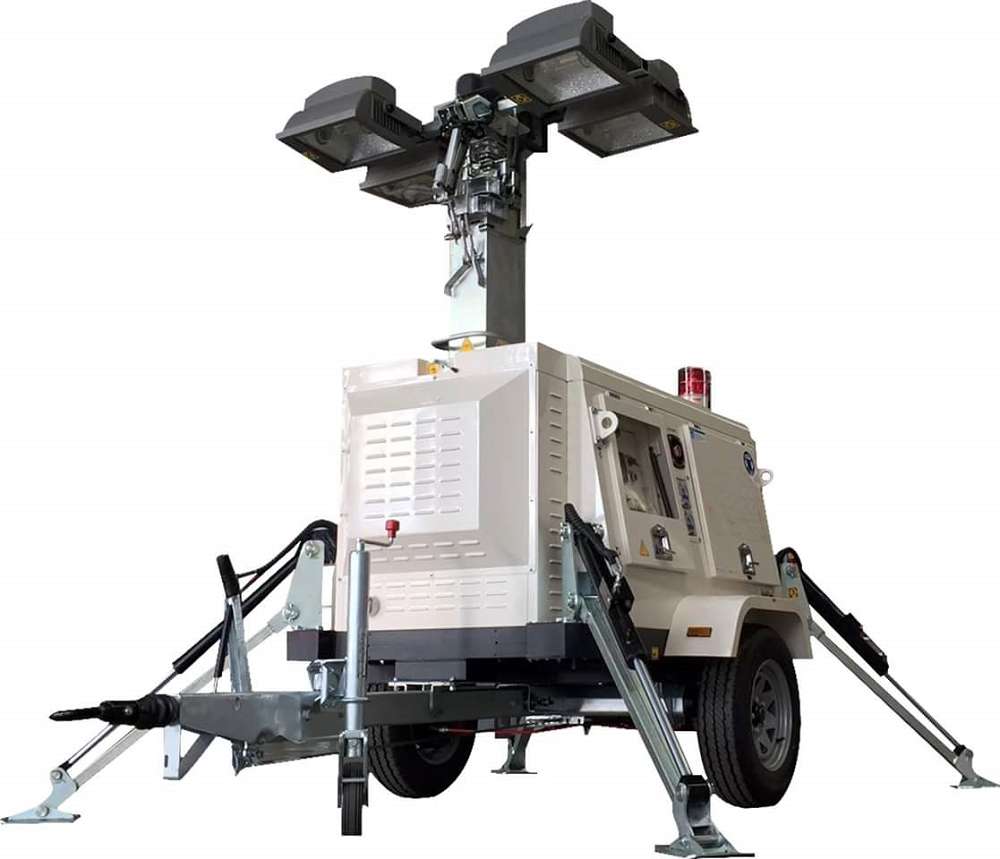
The following is a detailed introduction to the key points of maintenance and care of industrial light tower from multiple aspects:
I. Daily inspection and maintenance
1. Light source inspection: Check whether the light bulb (such as LED, etc.) is emitting light normally, whether there is flickering or brightness attenuation, and replace aging or damaged light sources in time.
- For solar-powered light tower, it is necessary to check whether the surface of the solar panel is clean to ensure charging efficiency and avoid the light source from being extinguished due to insufficient power.
2. Maintenance of mechanical and structural components
Light tower main structure: - Check whether the light tower (such as steel structure, concrete structure) has cracks, rust, coating peeling and other problems. For the steel structure, it is necessary to regularly remove rust and re-apply anti-corrosion paint (such as epoxy primer + polyurethane topcoat) to prevent rust caused by seawater and humid air. - Check whether the connection parts of the tower body (such as flanges and bolts) are firm, tighten loose parts, and replace damaged bolts if necessary.
Rotating mechanism (if any): - For rotating light towers, it is necessary to check the operating status of motors, reducers, gears and other components, add or replace lubricants (such as lithium-based grease) to ensure smooth rotation without abnormal noise. - Test whether the rotation speed meets the design requirements to avoid light signal errors due to abnormal rotation speed.
Electrical system maintenance: Line inspection: - Check whether the internal and external cables of the light tower are aging, damaged, or short-circuited, insulate the exposed cables, and replace aging cables. - Check whether the switches, contractors, relays and other electrical components in the distribution box are working properly, remove internal dust, and prevent component failure due to dust accumulation.
Grounding system: - Measure the grounding resistance (generally required to be ≤4Ω). If the resistance value exceeds the standard, it is necessary to check whether the grounding electrode is corroded or the grounding line is broken, and repair or add grounding electrodes in time to ensure the safety of equipment in thunderstorms.
Periodic in-depth maintenance:
Annual comprehensive overhaul, structural safety inspection: - Entrust professional institutions to conduct structural load tests on the light tower (such as wind and earthquake load simulations), evaluate the strength and stability of the tower, and reinforce parts with safety hazards (such as adding supports and repairing concrete cracks). - Check whether the light tower foundation has settled or shifted. If uneven foundation settlement is found, grouting and foundation reinforcement measures are required.
Backup power supply test:
1) Perform startup tests on backup power supplies such as diesel generators and batteries, check fuel reserves and battery capacity, and ensure that they can automatically switch and continue to supply power when the main power fails (generally requiring the backup power supply time to be ≥24 hours).
2) Systematic renovation and coating update every 5-10 years: - Sandblast and remove rust on the entire light tower, remove the old coating, and re-spray multiple layers of anti-corrosion coating (such as zinc powder primer + intermediate paint + topcoat) to improve weather resistance and salt spray resistance and extend the service life of the steel structure.
Parts replacement: - Replace aging seals (such as rubber seals on the edge of the lens) to prevent rain and moisture from penetrating into the light tower and damaging electrical equipment. - Disassemble and overhaul long-term mechanical parts (such as rotating motors and reducers), replace worn bearings, gears and other parts, or directly replace the equipment as a whole.
7. Maintenance points in special environments
Marine environment (coastal and island light towers)
Anti-salt spray corrosion: - Select salt spray-resistant materials (such as 316 stainless steel) for the tower body and equipment housing, and regularly rinse the tower body surface with fresh water to reduce salt crystal accumulation. - Place moisture-proof agents in the electrical equipment box and install ventilation devices to prevent internal components from rusting due to moisture.
Antifreeze and insulation in cold areas (high latitude or mountain light towers): - Wrap insulation materials for easily frozen parts such as water pipes and oil tanks, and install electric heating systems to prevent equipment damage caused by low-temperature freezing. - Regularly clean the snow on the top of the light tower to avoid excessive snow pressure damage to the structure and prevent snow from blocking the light source.
Lightning-prone areas
Lightning protection upgrade: - Strengthen the grounding system of lightning rods, add surge protectors (SPDs) to protect electrical equipment, and regularly test the effectiveness of lightning protection devices to ensure that lightning can be safely introduced into the earth.
8. Maintenance records and emergency management:
Maintenance file management - Establish a detailed maintenance ledger to record the time, content, problems found and treatment measures of each inspection, including the model, specification and replacement time of the replaced parts, so as to facilitate the traceability of equipment status and the formulation of subsequent maintenance plans. - Use digital management systems (such as the Internet of Things monitoring platform) to monitor the operating parameters of the light tower in real time (such as light source status, energy consumption, rotation angle), and discover potential faults in advance through data analysis.
Emergency response mechanism - Develop an emergency plan for light tower failures, clarify the handling process for emergencies such as light source failure and structural damage, such as immediately starting the backup power supply, notifying the maritime department to issue navigation warnings, and organizing a repair team to rush to the scene. - Reserve necessary spare parts (such as bulbs, cables, lubricants, seals) to ensure that damaged parts can be quickly replaced in an emergency and shorten the fault handling time.
Safety Precautions:
High-altitude work safety: Maintenance personnel must wear safety belts and helmets, use standard climbing equipment (such as lifting platforms and ladders), and prohibit climbing work in severe weather such as typhoons and heavy rains. Electrical safety: When inspecting electrical equipment, the power supply must be cut off, the "No Closing" sign must be hung, and insulated tools must be used to avoid electric shock accidents.
Environmental protection requirements: When handling waste paint, lubricating oil and other harmful substances, they must be recycled and disposed of in accordance with environmental protection regulations to prevent pollution of the ocean or soil. Through the above systematic maintenance and maintenance measures, the long-term stable operation of industrial light towers can be ensured, reliable navigation signals can be provided for ship navigation, and maritime traffic safety can be guaranteed. At the same time, with the development of technology, intelligent monitoring technology (such as drone inspections and real-time monitoring by sensors) can be gradually introduced to improve maintenance efficiency and accuracy.