Data centers use various types of load banks, selected based on their core functions (e.g., testing power system stability, simulating IT equipment loads, verifying cooling efficiency) and scenario requirements. Here's a brief summary:
By load nature:
Resistive load banks: Simulate purely heat-generating loads (e.g., CPU or power module heat loss in servers) via resistive elements, used to test power system capacity and cooling efficiency.
Inductive/capacitive load banks: Mimic inductive (e.g., transformers) or capacitive (e.g., filter circuits) components in IT gear, testing power systems' ability to handle reactive loads.
Hybrid load banks: Combine resistive, inductive, and capacitive loads to adjust active/reactive power ratios, realistically simulating IT loads for comprehensive power system testing.
By phase:
Three-phase load banks: Dominant in data centers (matching 3-phase power systems for UPS, generators, etc.), used to test stability of three-phase power systems by simulating balanced/unbalanced loads.
Single-phase load banks: For small IT devices or single-phase circuits, with lower power as auxiliary tools.
By control mode:
Intelligent controllable load banks: Remotely operable (via PLC, IoT platforms) to adjust power precisely, simulate dynamic IT load fluctuations, and integrate with DCIM for testing power systems.
Manual fixed load banks: Simple, manually adjusted, cost-effective for basic load verification.
By power & form:
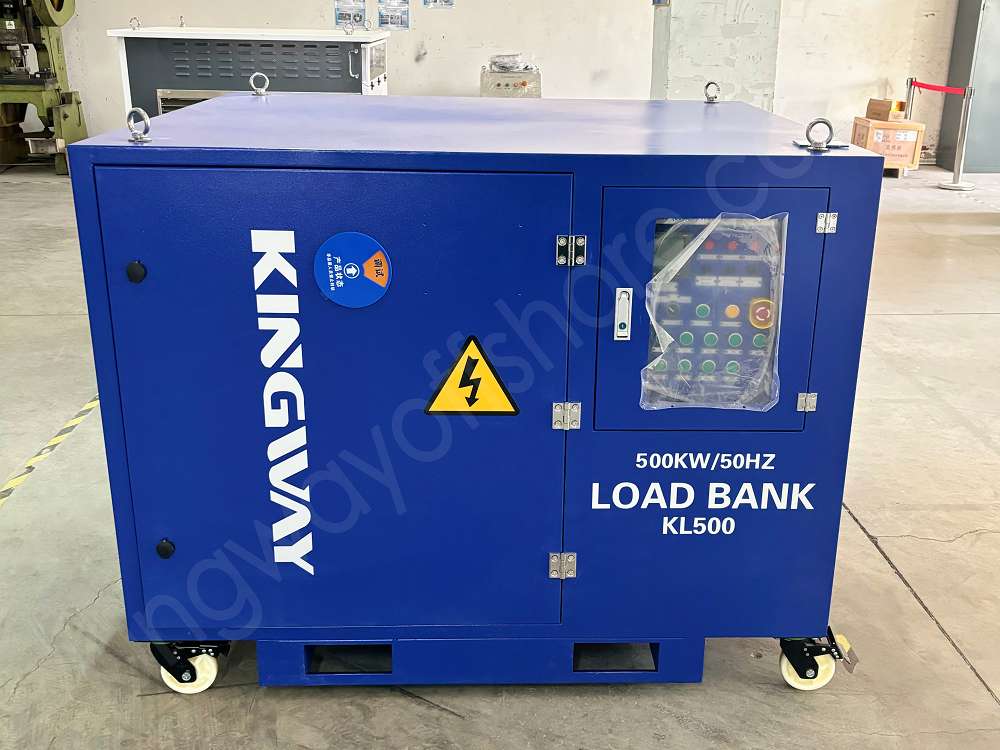
High-power load banks (tens of kW to MWs): Test full/overload capacity of generators/UPS and overall power capacity.
Modular load banks: Composed of standard modules (e.g., 10kW each) for flexible power combination and easy maintenance.
High-density load banks (1U/2U rack-mounted): Simulate high-density IT cabinet loads (≥10kW/cabinet) to test cabinet-level power links and cooling.
Specialized load banks:
Nonlinear ones: Simulate harmonics from IT power supplies to test system resistance.
Battery discharge load banks: For UPS battery testing, controlling discharge current/depth to assess capacity and reliability.
In summary, data centers mainly use three-phase, intelligently controllable, and hybrid load banks, along with high-power/modular types, to test power systems, simulate IT loads, and ensure infrastructure stability. Specialized load banks are used for specific scenarios like harmonic testing or battery checks.