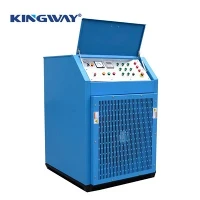
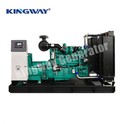
As a supplier of 30kw gas engines, I often get asked about the emissions of these engines. Understanding the emissions of a 30kw gas engine is crucial not only for environmental reasons but also for regulatory compliance and operational efficiency. In this blog post, I'll delve into the details of what emissions are produced by a 30kw gas engine, how these emissions are managed, and why it matters.
Types of Emissions from a 30kw Gas Engine
A 30kw gas engine primarily burns natural gas, which is a relatively clean - burning fuel compared to diesel or gasoline. However, it still produces several types of emissions during the combustion process.
Carbon Dioxide (CO₂)
CO₂ is a greenhouse gas that is a by - product of the complete combustion of natural gas in the engine. Natural gas is mostly composed of methane (CH₄), and when it burns, it reacts with oxygen (O₂) in the air to produce CO₂ and water vapor (H₂O). The chemical equation for the combustion of methane is: CH₄ + 2O₂ → CO₂+ 2H₂O.
The amount of CO₂ emitted by a 30kw gas engine depends on its efficiency and the amount of natural gas it consumes. Generally, a well - maintained 30kw gas engine will emit a certain amount of CO₂ per kilowatt - hour of electricity generated. For example, if the engine has an efficiency of around 35 - 40%, the CO₂ emissions can range from approximately 0.2 to 0.3 kg per kWh.
Nitrogen Oxides (NOₓ)
NOₓ are formed when nitrogen and oxygen in the air react at the high temperatures inside the engine's combustion chamber. These emissions are a concern because they can contribute to the formation of smog, acid rain, and ground - level ozone. In the case of a 30kw gas engine, the NOₓ emissions are influenced by factors such as the engine's compression ratio, ignition timing, and air - fuel ratio.
Modern 30kw gas engines are designed with advanced combustion technologies to reduce NOₓ emissions. For instance, some engines use lean - burn combustion, where the air - fuel mixture has more air than the stoichiometric ratio. This results in lower combustion temperatures, which in turn reduces the formation of NOₓ. The NOₓ emissions of a well - designed 30kw gas engine can be as low as 1 - 2 grams per kilowatt - hour.


Carbon Monoxide (CO)
CO is a colorless and odorless gas that is produced when there is incomplete combustion of the fuel in the engine. In a 30kw gas engine, factors like a malfunctioning fuel injection system, poor air - fuel mixing, or a damaged exhaust system can lead to increased CO emissions.
Proper engine tuning and regular maintenance are essential to keep CO emissions in check. A well - maintained 30kw gas engine should have CO emissions of less than 1 gram per kilowatt - hour.
Unburned Hydrocarbons (HC)
Unburned hydrocarbons are remnants of the fuel that do not fully combust in the engine. They can be released into the atmosphere through the exhaust system. Similar to CO, factors such as improper air - fuel ratio, ignition problems, or engine wear can cause an increase in HC emissions.
Modern 30kw gas engines are equipped with advanced ignition systems and fuel management systems to ensure complete combustion and minimize HC emissions. Typically, the HC emissions from a 30kw gas engine can be kept below 0.5 grams per kilowatt - hour.
Managing Emissions from a 30kw Gas Engine
As a supplier, we understand the importance of helping our customers manage the emissions of our 30kw gas engines. Here are some of the ways we achieve this:
Engine Design and Technology
We invest in research and development to design engines with advanced combustion technologies. For example, our engines are equipped with electronic control units (ECUs) that precisely control the air - fuel ratio, ignition timing, and other parameters to optimize combustion and reduce emissions.
Exhaust After - Treatment Systems
In some cases, we offer exhaust after - treatment systems for our 30kw gas engines. These systems can further reduce emissions of NOₓ, CO, and HC. For example, a selective catalytic reduction (SCR) system can be used to convert NOₓ into nitrogen and water vapor, while a three - way catalytic converter can reduce CO, HC, and NOₓ emissions simultaneously.
Regular Maintenance
We provide our customers with detailed maintenance schedules and guidelines to ensure that their 30kw gas engines operate at peak efficiency and with minimal emissions. Regular maintenance tasks include checking and replacing air filters, spark plugs, and fuel injectors, as well as performing engine tune - ups.
Why Emissions Matter
The emissions from a 30kw gas engine have several implications:
Environmental Impact
Reducing emissions is crucial for protecting the environment. CO₂ emissions contribute to global warming, while NOₓ, CO, and HC emissions can have negative impacts on air quality, human health, and the ecosystem. By using a 30kw gas engine with low emissions, our customers can play their part in reducing their carbon footprint and improving air quality.
Regulatory Compliance
Many countries and regions have strict regulations regarding engine emissions. By ensuring that our 30kw gas engines meet or exceed these regulations, we help our customers avoid costly fines and legal issues.
Operational Efficiency
Engines that produce fewer emissions are often more efficient. This is because a well - optimized combustion process not only reduces emissions but also improves fuel efficiency, which can result in lower operating costs for our customers.
Our Product Range
In addition to our 30kw gas engines, we also offer a range of other high - quality gas engines. For example, we have the Water Cooled 50hz 1500rpm 160kw Natural Gas Engine and the 50hz 1500rpm Water Cooled 60kw Natural Gas Engine. All our engines are designed with the latest technologies to ensure low emissions, high efficiency, and reliable performance.
If you are interested in our 30kw Gas Engine 50hz 1500rpm Water Cooled or any of our other products, we encourage you to contact us for a detailed discussion about your specific requirements. Our team of experts is ready to assist you in finding the best solution for your power needs. Whether you are looking for a reliable power source for your industrial facility, commercial building, or residential application, we have the expertise and products to meet your needs. Don't hesitate to reach out and start the conversation about how we can help you with your power generation requirements.
References
- Heywood, J. B. (1988). Internal Combustion Engine Fundamentals. McGraw - Hill.
- Crolla, D. A., & Cook, A. (2001). Vehicle Dynamics and Control. Springer.