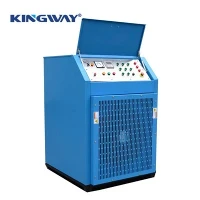
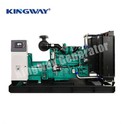
If you’re here because you’re working with or rely on containerized silent diesel generators, you already know there’s nothing worse than a unit going down and waiting weeks for a replacement part. As a supplier of these heavy-duty workhorses, I get asked all the time: “How easy is it to get spare parts for a standard containerized silent diesel generator?” The short answer is—if you work with the right provider, it’s way simpler than you think. Let’s break this down, no boring jargon, just real talk from someone who’s spent years troubleshooting these units for clients across industries.
First, let’s make sure we’re on the same page about what a standard containerized silent diesel generator actually is. It’s not just a big generator crammed into a box. Those standard containers are built to meet ISO shipping specs, so they’re stackable, weatherproof, and quiet enough for urban sites or sensitive areas like hospitals or telecom towers. If you want an example of a step up in noise reduction, check out this Super Silent Diesel Generator Set—but today we’re sticking to the standard ones that balance performance and accessibility, which is where their parts availability really shines.
Let’s start with the core components every standard containerized generator has, and how easy their parts are to get. The engine is the heart of the unit—most standard models use common commercial diesel engines (think Caterpillar, Cummins, or Perkins, no weird niche brands here). That means parts like fuel filters, oil filters, air filters, and spark plugs? You can pick those up at almost any heavy equipment parts shop, not just a specialty generator supplier. The alternator, which turns mechanical energy into electricity, is another common part—standard containerized generators use off-the-shelf alternators, so replacements don’t require custom machining. Even the control panel, the brain that starts and manages the unit, is a popular model, so parts like buttons, sensors, or the whole panel itself are easy to source.
But wait—what about parts specific to the container and the silent housing? Those are the parts most people worry about, right? The insulated walls that muffle noise, the vents that keep the engine cool, the fuel tank built into the container frame, the door locks, and the wiring harnesses. For standard models, these are all designed to be uniform. When we engineer our Standard Containerized Silent Diesel Generator, we use standard container dimensions (20ft or 40ft) so any replacement door, vent, or even a whole panel from a similar ISO container will fit. No custom cutting or welding needed—just swap and go. The wiring harnesses are pre-made to specific lengths for our standard models, so you won’t be waiting weeks for a custom harness. That’s a huge win for anyone who’s had to deal with custom parts and long lead times.
Now, let’s talk about what affects parts availability, because it’s not one-size-fits-all. First, who you buy from matters. Some cut corners by using cheap, custom parts to save money upfront, and those parts are impossible to source if something goes wrong. We never do that. Every part in our standard containerized generators is either a common industrial part, a standard off-the-shelf component, or a part we manufacture in bulk ourselves so we always have stock. Second, where you are in the world. If you’re in North America or Europe, most common parts are stocked locally. For clients in remote areas, we have regional distribution centers that hold inventory of the most frequently replaced parts—filters, belts, hoses, control sensors—so we can ship them in 24-48 hours. For less common parts, like the container’s insulated panels, we ship those in flat packs, so you don’t have to wait for a whole custom unit to be made.
Another thing: maintenance. Let’s be real, the best way to keep spare parts availability easy is to avoid needing them in the first place. Our standard containerized generators have a detailed maintenance schedule that makes it super clear when to replace parts, like changing filters every 250 hours of operation or checking the alternator belt every 500 hours. We also provide free access to a digital portal where you can look up exactly which part you need, order it directly, and even track the shipment. No more guessing if you have the right part or waiting on hold with customer service for an hour.


Wait, what about specialized use cases? For example, some clients use these generators for telecom towers, which means even a 24-hour delay can be a big problem. That’s why we also work with clients for Telecommunication Silent Diesel Generator needs, which ties into our standard model line—all the same part availability applies, and we can keep critical parts in stock specifically for telecom clients because we know how fast they need them.
Let’s talk about real-world examples to make this concrete. Last year, a client in a remote mining site in Australia had a belt break on their standard containerized generator. They reached out at 2pm our time, and we shipped the replacement belt from our Sydney distribution center by overnight courier. They had the part by 10am the next day, fixed the generator, and were back online without losing production. Another client in Germany had a faulty control sensor—we had the part in our Hamburg warehouse, it was delivered in 12 hours. Compare that to a custom generator from a brand that uses unique parts, and they would’ve waited 3-4 weeks.
Of course, no part is available forever, but for standard containerized silent diesel generators, the timeline for unique parts is way shorter than non-standard units. The fuel tank, for example, is built into the container frame to save space, but since we use standard ISO container fabrication, we can replace the tank without custom work. We keep a limited number of container frames in stock too, so if a whole section of the housing gets damaged, we can swap it out quickly.
I also want to be honest about the small stuff—like gaskets, bolts, seals. Those are the parts people forget about until they need them, and they’re often the ones that cause the most headaches. For our standard models, all the fasteners, gaskets, and seals are standard sizes, so you can pick them up at any hardware store if you need them in a pinch. That’s not something every generator supplier offers, and it’s a detail that makes a huge difference when you’re in a bind.
So, to wrap this up: spare parts availability for a standard containerized silent diesel generator is all about standardization, planning, and working with a supplier that prioritizes accessibility over cutting corners. No custom parts, no long lead times for common components, and the ability to get parts to you fast, even in remote areas.
If you’re in the market for a standard containerized silent diesel generator, or you already own one and want to make sure your spare parts are easy to get, get in touch with our team to talk through your specific needs. We can walk you through our part inventory, share maintenance tips to keep your generator running smoothly, and make sure you never have to wait for a critical part again.
References
- ISO 668: Series 1 freight containers — Classification, dimensions, and ratings
- Cummins Inc. (2023). Industrial Diesel Engine Spare Parts Catalog
- Global Power Supply Association (2022). Off-Grid Power Equipment Maintenance and Parts Availability Report
- American National Standards Institute (ANSI) (2021). Standards for Silent Diesel Generator Safety and Component Compatibility