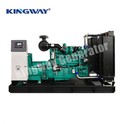
As a provider of Standard Containerized Silent Diesel Generators, I've had the privilege of witnessing firsthand the critical role these powerhouses play in various industries. When it comes to transporting these robust machines, a multitude of factors need to be carefully considered to ensure they reach their destinations in pristine condition. In this blog post, I'll delve into the essential transportation requirements for a Standard Containerized Silent Diesel Generator, offering insights based on my years of experience in the field.
1. Container Compatibility
The first and foremost requirement is ensuring the generator fits snugly within the chosen container. Standard Containerized Silent Diesel Generators are designed to be housed in standard shipping containers, typically 20 - foot or 40 - foot units. These generators are carefully engineered to take up the optimal amount of space within the container, allowing for efficient stacking and transportation. Before shipment, it's crucial to conduct a thorough measurement check to confirm that the generator's dimensions align with the container's internal specifications. Any discrepancies could lead to shifting during transit, which may cause damage to the generator.
2. Securing the Generator Inside the Container
Once the generator is loaded into the container, proper securing is of utmost importance. The generator should be firmly fixed to the container floor using heavy - duty straps, chains, or bolts. This prevents movement during transportation, whether by road, rail, or sea. For example, if the generator is being transported by sea, the vessel may encounter rough waves, which can cause significant lateral and vertical forces. Without proper securing, the generator could be jostled around, potentially damaging its internal components such as the engine, alternator, or control panels.
3. Weight Distribution
Balanced weight distribution within the container is another crucial consideration. The weight of the Standard Containerized Silent Diesel Generator needs to be evenly spread across the container floor to prevent uneven stress on the container structure. Uneven weight distribution can lead to container deformation, and in extreme cases, even cause the vehicle or vessel carrying the container to become unstable. When loading the generator, it's advisable to use load - calculation tools to determine the optimal placement for achieving the best weight balance.
4. Protection Against Moisture and Corrosion
During transportation, especially when exposed to the elements at sea or in humid environments, the generator is at risk of moisture damage. To mitigate this, it's essential to use moisture - absorbing materials such as desiccants inside the container. Additionally, the generator should be coated with a corrosion - resistant primer and paint before shipping. Some advanced models, like our Super Silent Diesel Generator Set, come with enhanced anti - corrosion features to withstand harsh transportation conditions.
5. Documentation and Permits
Accurate documentation is required for the smooth transportation of a Standard Containerized Silent Diesel Generator. This includes detailed information about the generator, such as its model, serial number, weight, dimensions, and technical specifications. Depending on the destination and the mode of transportation, various permits may also be necessary. For international shipments, customs clearance documents need to be prepared in advance. Failure to provide the correct documentation can lead to delays at ports or border crossings.
6. Protection During Loading and Unloading
The loading and unloading process is also a critical phase in transportation. Specialized equipment such as forklifts, cranes, or pallet jacks should be used to handle the containerized generator safely. Operators of the equipment need to be well - trained to avoid any rough handling that could damage the generator or its container. For instance, if a forklift is used, the forks should be properly positioned to prevent puncturing or denting the container.
7. Packaging for Additional Protection
In addition to the container itself, additional packaging can provide further protection. For example, foam padding can be used to cushion the generator within the container, especially around vulnerable parts like the control panel or the fuel tank. Some generators, such as our Telecommunication Silent Diesel Generator, which are often used in sensitive telecom applications, may require extra care in packaging to ensure their functionality is not compromised during transit.
8. Transportation Mode Selection
The choice of transportation mode depends on several factors, including the distance, cost, and urgency of delivery. For short distances, road transportation may be the most convenient option. Trucks can directly deliver the containerized generator to the destination, providing flexibility in terms of pick - up and drop - off locations. Rail transportation is suitable for longer distances within a country or region, offering a relatively cost - effective solution with a large carrying capacity. Sea freight is the preferred option for international shipments, although it generally takes longer. Air freight is the fastest but also the most expensive option and is usually reserved for urgent deliveries of high - value or time - sensitive equipment.


9. Route Planning
Regardless of the transportation mode chosen, careful route planning is essential. This involves considering factors such as road conditions, bridge height and weight restrictions, traffic patterns, and weather conditions. For example, if the generator is being transported by road through mountainous areas, steep gradients and sharp turns need to be taken into account. In the case of sea freight, the route should avoid areas prone to storms or piracy.
10. Insurance
Insuring the Standard Containerized Silent Diesel Generator during transportation is a smart move. It provides financial protection in case of damage, loss, or theft during transit. Insurance policies should be carefully selected to cover all potential risks associated with the chosen transportation mode and route. Before finalizing the insurance, it's important to understand the terms and conditions, including the deductible amount and the coverage limits.
As a supplier of Standard Containerized Silent Diesel Generator, we are committed to ensuring that our products reach our customers in the best possible condition. By adhering to these transportation requirements, we can minimize the risks associated with shipping and provide our clients with reliable power solutions on time.
If you're in the market for a Standard Containerized Silent Diesel Generator or have any questions about transportation or our products, we're here to help. Don't hesitate to reach out to us for more information and to start a discussion about your specific power needs. We look forward to the opportunity to supply you with a high - quality generator that meets your requirements.
References
- "Container Shipping Handbook" by John F. Coyle
- "Transportation Management: Planning, Operations, and Logistics" by Edward J. Bardi