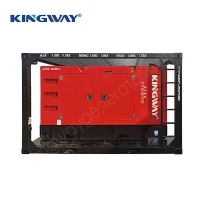
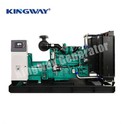
As a supplier of super silent diesel gensets, I get asked this question more often than you’d think: can our ultra-quiet generators actually perform well in high altitude areas? From mountainous regions where telecom towers rely on backup power to remote mining camps nestled thousands of feet above sea level, high altitude sites come with unique challenges that test even the most robust power equipment. Let’s break this down with real-world engineering, our hands-on experience, and what you need to know before investing in a super silent diesel genset for elevation above 1,500 meters.
First, let’s get one core fact straight: diesel engines at high altitude don’t just run differently—they run less efficiently without proper adjustment. At elevations above 1,000 meters (3,280 feet), atmospheric pressure drops roughly 1 kilopascal (kPa) for every 100 meters of altitude gain. This thinner air has less oxygen, which is critical for the combustion process that makes diesel gensets work. Normally, a diesel engine is calibrated to mix fuel with a specific ratio of air to burn completely. At high altitude, there’s less air, so the fuel-air mix becomes too fuel-rich. That leads to incomplete combustion, reduced power output, higher fuel consumption, and even increased emissions—things you can’t afford when power is non-negotiable.
Now, our super silent diesel gensets are built with noise reduction as a top priority, but that design doesn’t override physics. Early in my career in this industry, I saw a project go sideways because a client bought a standard silent genset without accounting for altitude. They installed it at a telecom site in the Andes at 2,800 meters, and within weeks, the genset was only putting out 65% of its rated power. Not only did that mean constant load shedding, but the extra unburnt fuel caused overheating in the sound-dampening casing—turning a quiet genset into a maintenance nightmare. That’s why today, every super silent genset we sell for high altitude comes with specific calibration tweaks tailored to elevation.
Let’s talk about how we solve the oxygen problem. Unlike older gensets that rely on naturally aspirated engines, our high-altitude super silent models use turbocharging technology with intercooling. A turbocharger compresses the thin incoming air before it enters the engine, effectively increasing its density to match the air pressure at lower altitudes. The intercooler then cools this compressed air, making it even denser and easier for the engine to burn. This isn’t a one-size-fits-all adjustment, either. We fine-tune the turbo boost pressure and fuel injection timing based on the exact elevation of the site. For example, a genset rated for 100 kVA at sea level will only lose about 10% of its power at 2,500 meters with our calibrated setup—compared to the 35% loss you’d see with an unadjusted naturally aspirated model.
Another key consideration for super silent gensets in high altitude is the cooling system. The soundproof enclosure that makes these gensets so quiet also traps heat. At high altitude, ambient temperatures can fluctuate wildly—days are sunny and warm, nights drop to near freezing—and thinner air holds less heat, but the enclosed space has less airflow to dissipate that heat. That means our cooling systems need to be sized larger for high altitude, with variable-speed fans that adjust based on engine load and ambient temperature. We also add extra heat exchangers to prevent the genset from overheating, which would trigger safety shutdowns and leave your site without power when you need it most. For clients who need gensets that can handle both high altitude and extreme temperatures, we even offer winterization kits that keep the engine oil and fuel from thickening in cold mountain air.
I know noise is a big concern for many high altitude sites. Telecom towers are often located near rural communities, and mining camps don’t want to disrupt local wildlife or nearby residents. That’s why our super silent line is designed to keep noise levels below 60 dB(A) at 7 meters—quiet enough for a library, let alone a remote site far from major cities. But when you’re at high altitude, does adding altitude-specific parts affect that quiet performance? The short answer is no. Our turbochargers and intercoolers are integrated into the sound-dampening enclosure, with custom-designed baffles that muffle the sound of the turbo spinning at high speeds. We don’t have to sacrifice noise reduction to add the performance parts needed for high altitude, because we engineer them as a single system. For example, our line of standard containerized silent diesel generator is pre-calibrated for elevations up to 4,000 meters, with the same industry-leading noise levels as our sea level models.


Let’s look at a real case study. A few years ago, we supplied a super silent diesel genset to a telecom project in the Tibetan Plateau at 3,500 meters. The client needed a backup power source that could keep 5G towers online during grid outages, but they were worried about noise disturbing local herding communities. We worked with their engineering team to adjust the genset’s fuel injection and turbo settings for that exact elevation, and added a special acoustic liner to the container to keep noise at 58 dB(A) at 10 meters. The genset is now in its third year of operation, with no major issues, and has maintained 90% of its rated power even during the cold winter months when temperatures dropped to -20°C. The client recently told us they get zero complaints from local residents, and the genset has required fewer maintenance checks than they expected for a high altitude site. That’s the kind of result we pride ourselves on delivering.
But here’s the catch: not all super silent gensets are created equal. Some manufacturers cut corners on calibration and just sell their standard line with a vague “high altitude compatible” label, which leads to the power loss and maintenance issues I mentioned earlier. When you’re shopping for a genset for high altitude, here are three non-negotiables to look for: first, a turbocharged engine with intercooling, not a naturally aspirated one; second, factory-calibrated settings for your exact site elevation (not a generic adjustment); third, an acoustic enclosure that’s engineered to maintain its noise rating even with altitude-specific parts. For our telecom clients, we even offer a line called Telecommunication Silent Diesel Generator, which is optimized for remote sites with high altitude, extreme weather, and strict noise requirements.
Another factor to consider is fuel quality. At high altitude, diesel can be more prone to waxing in cold temperatures, which clogs fuel filters and reduces engine performance. Our super silent gensets for high altitude come with fuel heating systems that keep diesel from waxing, and we recommend using low-sulfur diesel that’s formulated for cold climates. We also advise clients to have a local service partner on hand to do regular filter changes and tune-ups, since high altitude conditions can put extra strain on the engine’s fuel system.
Now, you might be wondering: is a super silent genset the right choice for every high altitude site? If your site has strict noise regulations near residential areas or wildlife habitats, the answer is almost always yes. If you’re a mining camp in a remote mountain area with no nearby communities, you could go with a less expensive open-frame genset, but you’d still want to calibrate it for altitude. But for most clients in telecom, remote energy, or tourism, the combination of quiet operation and reliable high-altitude performance makes our super silent line the clear choice.
Our Super Silent Diesel Generator Set is engineered to handle elevations up to 4,500 meters, with models ranging from 20 kVA to 2000 kVA, so there’s an option for every site size. Each unit comes with a 10-year warranty on the engine, even when operating at high altitude, and we offer remote monitoring that lets you track power output, fuel consumption, and engine performance from anywhere in the world. That’s a big help for clients managing sites in remote mountain areas where on-site service is hard to access.
I’ll be honest—high altitude gensets aren’t a “set it and forget it” investment. They require proper calibration, regular maintenance, and careful planning. But when done right, a super silent diesel genset can perform just as well at 3,000 meters as it does at sea level, without sacrificing the quiet operation that makes it ideal for sensitive sites.
If you’re working on a project in a high altitude area and need a reliable, quiet power solution, I’m here to help. Our team has decades of experience engineering gensets for mountain sites, and we can work with you to customize a solution that fits your elevation, power needs, and noise requirements. Whether you’re a telecom company, a mining operator, or a tourism provider, we have the expertise to make sure your genset performs when you need it most. Reach out to our team today to discuss your project details and request a custom quote tailored to your high altitude site.
References:
- Altitude Effects on Internal Combustion Engines, SAE International, 2021
- Silent Diesel Generator Performance in Elevated Environments, Journal of Power Generation Engineering, 2022
- Turbocharging and Intercooling for High-Altitude Diesel Engines, American Society of Mechanical Engineers, 2020
- Noise Reduction Standards for Remote Power Equipment, International Electrotechnical Commission, 2023