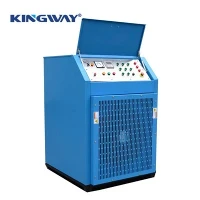
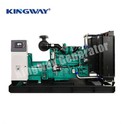
Customizing a gas generator set is a strategic decision that requires careful consideration of various factors to ensure it meets your specific power needs. As a gas generator set supplier, I understand the importance of tailoring these units to fit diverse applications. In this blog, I'll guide you through the process of customizing a gas generator set, covering everything from understanding your requirements to making the right choices for your project.
Understanding Your Power Requirements
The first step in customizing a gas generator set is to accurately assess your power needs. This involves determining the total wattage required to run all the equipment and appliances you plan to connect to the generator. Consider both the starting and running wattages of your devices, as some equipment, like motors, require a higher initial surge of power to start up.
For example, if you're using the generator for a small business, you'll need to account for all the electrical equipment, such as computers, printers, and lighting. On the other hand, if it's for a residential use, you might need to power essential appliances like refrigerators, air conditioners, and heaters.


To calculate your power requirements, make a list of all the devices you want to run simultaneously and note down their wattage ratings. Add up the wattages to get the total power needed. It's also a good idea to add a buffer of about 20% to account for any future expansion or unexpected power demands.
Choosing the Right Fuel Type
Gas generator sets can run on different types of fuels, including natural gas, liquefied natural gas (LNG), liquefied petroleum gas (LPG), and biogas. Each fuel type has its own advantages and considerations.
- Natural Gas: It is a clean-burning fuel that is widely available in many areas. It is often the most cost-effective option for long-term use, especially if you have access to a natural gas pipeline. Natural gas generators are also relatively low-maintenance and produce fewer emissions compared to other fuels.
- LNG: Liquefied natural gas is a more concentrated form of natural gas that can be stored and transported more easily. It is a good option for areas where natural gas pipelines are not available. However, LNG requires special storage and handling equipment, which can add to the overall cost.
- LPG: Liquefied petroleum gas is a versatile fuel that can be used in a variety of applications. It is readily available and can be stored in portable tanks. LPG generators are often used in remote locations or for backup power.
- Biogas: Biogas is a renewable fuel that is produced from organic materials such as agricultural waste, sewage, and landfill gas. It is an environmentally friendly option that can help reduce greenhouse gas emissions. Biogas generators are becoming increasingly popular in the agricultural and waste management sectors.
When choosing the fuel type for your gas generator set, consider factors such as availability, cost, environmental impact, and storage requirements. You may also want to consult with a professional to determine the best fuel option for your specific needs.
Selecting the Appropriate Generator Size
Once you have determined your power requirements and chosen the fuel type, the next step is to select the appropriate generator size. The size of the generator is typically measured in kilowatts (kW) or kilovolt-amperes (kVA).
To choose the right generator size, you need to match the generator's output capacity to your power needs. As mentioned earlier, it's important to consider both the starting and running wattages of your devices. You can use a generator sizing calculator or consult with a professional to determine the appropriate generator size for your application.
It's also important to note that oversized generators can be inefficient and costly to operate, while undersized generators may not be able to meet your power demands. Therefore, it's crucial to choose the right generator size to ensure optimal performance and efficiency.
Considering Additional Features and Options
In addition to the basic specifications, there are several additional features and options that you can consider when customizing your gas generator set. These features can enhance the performance, reliability, and convenience of the generator.
- Automatic Transfer Switch (ATS): An ATS allows the generator to automatically start and transfer power to your electrical system in the event of a power outage. This ensures seamless power supply and eliminates the need for manual intervention.
- Soundproof Enclosure: A soundproof enclosure can reduce the noise level of the generator, making it more suitable for use in residential or noise-sensitive areas.
- Remote Monitoring and Control: Remote monitoring and control systems allow you to monitor the performance of the generator and control its operation from a remote location. This can be particularly useful for large-scale applications or for generators located in remote areas.
- Parallel Operation: Parallel operation allows you to connect multiple generators together to increase the total power output. This is useful for applications that require a higher power capacity.
When considering these additional features and options, it's important to evaluate your specific needs and budget. Some features may be essential for your application, while others may be optional.
Working with a Professional Supplier
Customizing a gas generator set can be a complex process, and it's important to work with a professional supplier who has the expertise and experience to guide you through the process. A reputable supplier can help you assess your power needs, choose the right generator size and fuel type, and select the appropriate additional features and options.
As a gas generator set supplier, we offer a wide range of customizable generator sets to meet the diverse needs of our customers. We have a team of experienced engineers and technicians who can provide you with expert advice and support throughout the customization process.
We also offer a variety of products, including Supply 40KVA-600KVA Natural Gas LNG LPG Biogas, Water Cooled 50hz 1500rpm 60hz Silent 80kw 100kva Biogas Generator Set Main Grid, and Water Cooled 50hz 1500rpm Silent 100kw 125kva Natural Gas Generator Set Main Grid. Our products are designed to provide reliable and efficient power solutions for a variety of applications.
Conclusion
Customizing a gas generator set is a process that requires careful planning and consideration. By understanding your power requirements, choosing the right fuel type and generator size, and considering additional features and options, you can ensure that your generator set meets your specific needs. Working with a professional supplier can also help you make the right choices and ensure a successful customization process.
If you're interested in customizing a gas generator set for your project, please feel free to contact us. We'll be happy to discuss your requirements and provide you with a customized solution that meets your needs and budget.
References
- "Generator Sizing Guide." Generac Power Systems.
- "Choosing the Right Generator for Your Needs." Briggs & Stratton.
- "Gas Generator Sets: A Comprehensive Guide." Caterpillar Inc.