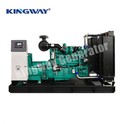
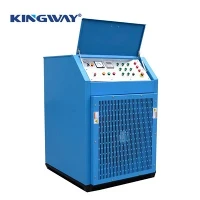
When it comes to ensuring a reliable and efficient power source, natural gas generator sets have emerged as a popular choice for both residential and commercial users. As a seasoned supplier of natural gas generator sets, I've witnessed firsthand the diverse needs and challenges that customers face when selecting the right unit. In this blog post, I'll share some valuable insights to help you make an informed decision based on your specific requirements.
Understanding Your Power Needs
The first step in choosing the right natural gas generator set is to accurately assess your power requirements. This involves calculating the total wattage of all the appliances, equipment, and systems you intend to power during an outage or as part of your regular operations. Start by making a list of essential items, such as lights, refrigerators, heating or cooling systems, and critical medical equipment. For commercial users, include machinery, computers, and other business - related devices.
Once you have your list, check the wattage ratings of each item. These ratings are usually found on the product label or in the user manual. Add up the wattages of all the items you want to power simultaneously. It's important to account for both the running wattage (the power needed to keep an appliance running) and the starting wattage (the extra power required to start some motors, like those in air conditioners and refrigerators).
For example, if you're a homeowner looking to power a refrigerator (running wattage: 200W, starting wattage: 600W), a few lights (total running wattage: 100W), and a small fan (running wattage: 50W), your total power requirement would be at least 600 + 200+100 + 50 = 950W. However, it's advisable to add a buffer of 20 - 30% to account for future expansions or unexpected power surges. So, you'd need a generator with a capacity of around 1200 - 1300W.
Evaluating Generator Capacity
Generator capacity is measured in kilowatts (kW) or kilovolt - amperes (kVA). A general rule of thumb is that for resistive loads (such as lights and heaters), 1 kVA is approximately equal to 1 kW. For inductive loads (like motors), the power factor comes into play, and 1 kVA is usually equivalent to 0.8 - 0.9 kW.
If you have a relatively small power requirement, say for a small home or a small office, a generator with a capacity of 5 - 20 kW might be sufficient. For larger homes with multiple appliances and systems or small commercial establishments, a 20 - 100 kW generator could be more appropriate. Industrial applications or large commercial buildings may require generators with capacities of 100 kW or more.
We offer a wide range of natural gas generator sets to meet different capacity needs. For instance, our Water Cooled 50hz 1500rpm 60hz Silent 80kw 100kva Biogas Generator Set Main Grid is an excellent choice for medium - sized commercial and industrial applications. It provides a reliable power output of 80 kW, suitable for powering multiple pieces of equipment simultaneously.
Considering Runtime and Fuel Efficiency
Runtime is another crucial factor to consider. It refers to how long the generator can operate on a full tank of fuel or a continuous supply of natural gas. A longer runtime means less frequent refueling or maintenance, which is especially important during long - term power outages.
Natural gas is a cost - effective and readily available fuel source. It offers better fuel efficiency compared to some other fuels, such as diesel. When evaluating a generator's fuel efficiency, look for models with advanced engine technology and efficient combustion systems. These features can significantly reduce fuel consumption and operating costs over time.
Our Kingway Natural Gas Generator 250KVA Powered is designed with high - efficiency engines. It can run continuously for extended periods, providing reliable power while keeping fuel costs in check. This makes it a great option for businesses that require uninterrupted power supply.
Noise Level and Environmental Considerations
Noise can be a major concern, especially if the generator will be located near residential areas or in noise - sensitive environments. Look for generators with sound - proof enclosures or noise - reducing features. These silent generators can operate quietly, minimizing the impact on the surrounding environment.
In addition to noise, environmental factors such as emissions are also important. Natural gas is a cleaner - burning fuel compared to diesel, producing fewer pollutants such as carbon monoxide, particulate matter, and nitrogen oxides. When choosing a generator, look for models that meet or exceed environmental regulations in your area.
Our 160KW Natural Gas Generator is not only powerful but also designed with low - noise and low - emission features. It can be installed in a variety of settings without causing significant noise pollution or environmental harm.
Reliability and Maintenance
Reliability is key when it comes to a generator set. You want a unit that will start up quickly and operate smoothly when you need it most. Look for generators from reputable manufacturers with a proven track record of reliability. Check customer reviews and ratings to get an idea of the generator's performance in real - world situations.


Maintenance is also an important aspect. A generator that is easy to maintain will save you time and money in the long run. Look for models with accessible components, clear maintenance instructions, and a reliable support network. Regular maintenance, such as oil changes, filter replacements, and inspections, will ensure the longevity and optimal performance of your generator.
Additional Features and Accessories
Some generators come with additional features and accessories that can enhance their functionality and convenience. These may include automatic transfer switches, which allow the generator to automatically start and connect to your electrical system when a power outage occurs. Remote monitoring systems are also becoming increasingly popular, enabling you to monitor the generator's performance, fuel level, and other parameters from a distance.
Making the Right Choice
Choosing the right natural gas generator set requires careful consideration of your power needs, capacity requirements, runtime, noise level, environmental impact, reliability, maintenance, and additional features. By taking the time to evaluate these factors and doing your research, you can select a generator that meets your specific needs and provides reliable power for years to come.
If you're still unsure about which natural gas generator set is right for you, don't hesitate to reach out to us. Our team of experts is here to help you make an informed decision. We can provide detailed product information, answer your questions, and assist you in finding the perfect generator for your requirements. Contact us today to start the discussion about your power needs and explore our range of high - quality natural gas generator sets.