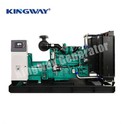
Hey there! As a supplier of Open Type Diesel Generators, I'm super stoked to walk you through the different parts of these awesome machines. Whether you're in the market for a generator or just curious about how they work, this blog post is for you.
Engine
The engine is like the heart of an Open Type Diesel Generator. It's what makes the whole thing run. Most of the generators we supply use diesel engines because they're known for their durability and fuel efficiency. Diesel engines work on the principle of compression ignition. That means they compress air in the cylinders until it gets really hot, and then they inject diesel fuel into the hot air. The fuel ignites, and that creates the power to turn the generator.
Diesel engines come in different sizes and configurations. You've got single - cylinder engines for smaller generators, which are great for light - duty applications like powering a small shed or a camping setup. Then there are multi - cylinder engines for larger generators that can handle the power needs of a small business or a big household.
Alternator
The alternator is another crucial part. Its job is to convert the mechanical energy from the engine into electrical energy. It's made up of a stator and a rotor. The stator is the stationary part, and it has a set of coils. The rotor, on the other hand, is the rotating part, and it creates a magnetic field. As the rotor spins inside the stator, it induces an electrical current in the stator's coils.
The output of the alternator can be adjusted to meet different power requirements. Some of our generators are designed to produce 60HZ, which is common in North America. You can check out our 60HZ Open Diesel Generator for more details. And for regions where 50HZ is the standard, like most of Europe and Asia, we have 50HZ Open Diesel Generator.
Fuel System
The fuel system is responsible for storing and delivering diesel fuel to the engine. It consists of a fuel tank, a fuel pump, and fuel injectors. The fuel tank holds the diesel fuel, and the fuel pump draws the fuel from the tank and sends it to the injectors. The injectors then spray the fuel into the engine's cylinders at the right time.
It's important to keep the fuel system clean and well - maintained. Dirty fuel can clog the injectors and cause the engine to run poorly. We recommend using high - quality diesel fuel and changing the fuel filters regularly.
Cooling System
Diesel engines generate a lot of heat when they're running, so a good cooling system is essential. The cooling system usually includes a radiator, a water pump, and coolant. The water pump circulates the coolant through the engine to absorb the heat. Then the hot coolant flows to the radiator, where it's cooled down by the air passing through the radiator fins.
If the cooling system fails, the engine can overheat, which can lead to serious damage. That's why it's important to check the coolant level regularly and make sure the radiator is clean and free of debris.
Exhaust System
The exhaust system is responsible for getting rid of the exhaust gases produced by the engine. It includes an exhaust manifold, a muffler, and an exhaust pipe. The exhaust manifold collects the exhaust gases from the engine's cylinders and sends them to the muffler. The muffler reduces the noise of the exhaust gases, and the exhaust pipe directs the gases out of the generator.
A well - functioning exhaust system is important for both the performance of the generator and the environment. It helps to reduce noise pollution and ensures that the exhaust gases are safely released.
Control Panel
The control panel is like the brain of the generator. It allows you to start and stop the generator, monitor its performance, and adjust its settings. The control panel usually has a display that shows important information like the voltage, frequency, and engine temperature.
Some of our generators come with advanced control panels that can be connected to a computer or a smartphone. This allows you to monitor and control the generator remotely, which is really convenient, especially if you're away from the generator.
Lubrication System
The lubrication system is responsible for reducing friction between the moving parts of the engine. It includes an oil pump, an oil filter, and an oil reservoir. The oil pump circulates the oil through the engine, and the oil filter removes any dirt or debris from the oil.
Proper lubrication is crucial for the longevity of the engine. Without enough lubrication, the moving parts can wear out quickly, which can lead to engine failure. That's why it's important to change the oil and the oil filter at the recommended intervals.
Battery and Starter
The battery and starter are used to start the engine. The battery stores electrical energy, and the starter uses this energy to turn the engine over. When you turn the key or press the start button on the control panel, the starter motor engages with the engine's flywheel and starts the engine.
It's important to keep the battery charged and in good condition. A weak or dead battery can prevent the generator from starting. You can use a battery charger to keep the battery charged when the generator is not in use.
Base Frame
The base frame provides a stable platform for the generator. It supports the engine, the alternator, and all the other components. The base frame is usually made of steel or aluminum, and it's designed to be strong and durable.


Some base frames also have features like vibration isolation mounts, which help to reduce the vibration and noise of the generator. This is especially important if the generator is going to be used in a residential or commercial area.
Air Intake System
The air intake system is responsible for supplying clean air to the engine. It includes an air filter, an air intake duct, and a turbocharger (in some generators). The air filter removes dust, dirt, and other contaminants from the air before it enters the engine.
A clean air intake system is important for the performance and longevity of the engine. If the air filter is clogged, the engine may not get enough air, which can lead to poor performance and increased fuel consumption.
Conclusion
So, there you have it! These are the main parts of an Open Type Diesel Generator. Each part plays a crucial role in the generator's performance and reliability. Whether you need a generator for your home, business, or industrial application, understanding these parts can help you make an informed decision.
If you're interested in purchasing an Open Type Diesel Generator, we'd love to have a chat with you. We can help you choose the right generator for your needs and answer any questions you might have. Just reach out to us, and we'll get the ball rolling on your generator purchase.
References
- Diesel Generator Handbook
- Generator Technology and Maintenance Manual