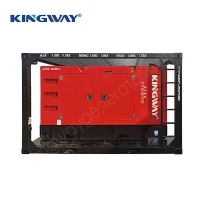
Hey there! As a supplier of Diesel Generator Sets, I often get asked about the difference between stationary and portable diesel generator sets. So, let's dive right in and break it down.


1. Physical Design and Structure
First off, let's talk about the physical differences. A stationary diesel generator set is like a big, sturdy building block in your power setup. It's usually installed in a fixed location, like a basement, a dedicated generator room, or an outdoor enclosure. These generators are built to be heavy - duty and are often quite large in size. They're connected directly to the electrical system of a building through a permanent wiring setup.
On the other hand, a portable diesel generator set is designed for mobility. It's like a little power - on - the - go machine. You can easily move it around using wheels or even carry it in some smaller models. Portable generators are generally smaller and lighter, making them perfect for situations where you need power in different locations, like on a construction site or during a camping trip.
2. Power Output
Power output is a major factor in distinguishing between these two types of generator sets. Stationary diesel generators are capable of producing a much higher power output. They're designed to meet the long - term and high - demand power needs of large buildings, factories, or commercial facilities. For example, a stationary generator can provide power for an entire hospital or a large manufacturing plant, with outputs ranging from hundreds of kilowatts to several megawatts.
Portable diesel generators, in contrast, have a relatively lower power output. They're more suitable for small - scale power needs. You can use them to power a few household appliances during a power outage, or to run some basic tools at a construction site. Their power output usually ranges from a few kilowatts to around 20 - 30 kilowatts.
3. Fuel Capacity and Runtime
When it comes to fuel capacity and runtime, there's a clear difference. Stationary diesel generators have large fuel tanks because they're meant to run for long periods without interruption. These generators can be connected to an external fuel storage system, like a large fuel tank, to ensure continuous operation for days or even weeks if needed. This makes them ideal for backup power in critical facilities where power outages can have serious consequences.
Portable diesel generators have smaller fuel tanks. Their runtime is limited, usually a few hours to maybe a day or so depending on the load and the size of the tank. You need to refill them more frequently, but this is manageable given their intended use for short - term power needs.
4. Installation and Maintenance
Installing a stationary diesel generator set is a complex process. It requires professional installation and involves things like proper siting, foundation work, and connection to the building's electrical system. Maintenance is also more involved. Regular inspections, servicing, and testing are necessary to ensure the generator is in good working condition, especially since it's often used for critical applications.
Portable diesel generators are much easier to install. You just need to make sure it's placed on a flat and stable surface, connect the appliances, and start it up. Maintenance is relatively straightforward too. You still need to do regular checks on the oil, fuel, and air filters, but it's less time - consuming compared to stationary generators.
5. Noise Level
Noise is another important aspect. Stationary diesel generators are usually installed in sound - proof enclosures or in locations away from living areas. Even with these measures, they can still be quite noisy due to their large - scale operation and high power output. However, modern stationary generators are designed with noise - reduction technology to minimize the impact.
Portable diesel generators are generally noisier in relation to their size. Since they're often used in open areas or close to people, the noise can be a bit of a nuisance. But again, manufacturers are working on improving the noise levels of portable generators as well.
6. Cost
The cost differences between stationary and portable diesel generator sets are significant. Stationary generators are more expensive to purchase, install, and maintain. This is because of their high - end components, large size, and complex installation requirements. However, they offer long - term reliability and high - capacity power, which justifies the cost for large - scale applications.
Portable diesel generators are much more affordable. They're a cost - effective solution for those who need occasional or short - term power. You can get a decent - quality portable generator at a relatively low price, making them accessible to a wider range of users.
Examples of Our Products
If you're interested in our products, we have a great range of diesel generator sets. For those who need a 60HZ power supply, check out our 60HZ Open Diesel Generator. It offers reliable power output and is suitable for various applications. And if you're in an area that uses a 50HZ power grid, our 50HZ Open Diesel Generator is a great option.
Conclusion
In conclusion, the choice between a stationary and portable diesel generator set depends on your specific needs. If you have a large - scale, long - term power requirement, a stationary generator is the way to go. But if you need power on the move or for short - term use, a portable generator is more suitable.
If you're interested in purchasing a diesel generator set, whether it's stationary or portable, feel free to reach out to us. We're here to help you find the perfect generator for your needs. Our team of experts can provide you with more information, answer your questions, and guide you through the selection process. Don't hesitate to contact us for a quote or to start a discussion about your power requirements.
References
- Diesel Generator Handbook by John Brown
- Power Generation Technology: An Introduction by Mark Smith