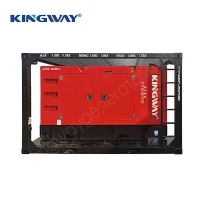
As a supplier of explosion proof diesel generators, I've seen firsthand the importance of reducing exhaust emissions. Not only does it help protect the environment, but it also ensures compliance with increasingly strict regulations. In this blog, I'll share some practical tips on how to reduce the exhaust emissions of an explosion proof diesel generator.
1. Choose the Right Generator Size
One of the first things to consider is the size of the generator. A generator that is too large for your needs will run inefficiently, burning more fuel and producing more emissions. On the other hand, a generator that is too small may struggle to meet your power requirements, leading to overloading and increased emissions.
To determine the right size generator for your needs, you'll need to calculate your power requirements. This includes considering the total wattage of all the equipment you'll be running simultaneously. You can find the wattage ratings of your equipment on the nameplates or in the user manuals. Once you have the total wattage, you can add a 20-30% buffer to account for any future expansion or unexpected loads.
For example, if you have a total power requirement of 100kW, you might consider a 120-130kW generator. This will ensure that the generator operates within its optimal range, reducing fuel consumption and emissions.
We offer a range of explosion proof diesel generators in different sizes, including the 150KVA Zone 2 Ex-proof Diesel Generator, 60KVA Zone 2 Ex-proof Diesel Generator, and 1000KVA Zone 2 Ex-proof Diesel Generator. These generators are designed to meet the specific requirements of hazardous environments while providing reliable power with reduced emissions.
2. Use High - Quality Fuel
The quality of the fuel you use can have a significant impact on the exhaust emissions of your generator. Low - quality fuel may contain impurities such as sulfur, which can increase the production of harmful pollutants like sulfur dioxide (SO₂) when burned.
It's important to use diesel fuel that meets the relevant standards. Look for fuel with a low sulfur content, as this will help reduce SO₂ emissions. Ultra - low sulfur diesel (ULSD) is a popular choice, as it typically contains less than 15 parts per million (ppm) of sulfur, compared to traditional diesel which can have sulfur levels of up to 500 ppm.
In addition to low sulfur content, high - quality fuel should also have good cetane ratings. A higher cetane number indicates better ignition quality, which can lead to more complete combustion and lower emissions of particulate matter (PM) and unburned hydrocarbons (HC).
3. Regular Maintenance
Regular maintenance is crucial for keeping your explosion proof diesel generator running efficiently and reducing emissions. Here are some key maintenance tasks:
- Air Filter Cleaning/Replacement: A clogged air filter restricts the flow of air into the engine, causing incomplete combustion and increased emissions. Check the air filter regularly and clean or replace it as needed.
- Fuel Filter Replacement: A dirty fuel filter can prevent the proper flow of fuel to the engine, leading to poor performance and higher emissions. Replace the fuel filter at the manufacturer - recommended intervals.
- Oil Changes: Clean oil is essential for lubricating the engine components and reducing friction. Over time, oil can become contaminated, which can affect engine performance and increase emissions. Change the oil and oil filter according to the maintenance schedule.
- Spark Plug Inspection (if applicable): In some diesel engines, spark plugs or glow plugs are used to aid ignition. Make sure these are in good condition and replace them if they are worn out.
4. Install Emission Control Systems
There are several emission control systems available that can help reduce the exhaust emissions of your explosion proof diesel generator.
- Diesel Oxidation Catalyst (DOC): A DOC is a simple and effective emission control device. It works by oxidizing carbon monoxide (CO) and unburned hydrocarbons (HC) in the exhaust gas, converting them into carbon dioxide (CO₂) and water vapor.
- Diesel Particulate Filter (DPF): A DPF is designed to trap particulate matter (PM) in the exhaust gas. It can significantly reduce the amount of soot and other harmful particles released into the atmosphere. However, DPFs require periodic regeneration to remove the trapped particles.
- Selective Catalytic Reduction (SCR) System: An SCR system reduces nitrogen oxides (NOₓ) emissions. It injects a urea - based solution (AdBlue) into the exhaust stream. The urea reacts with the NOₓ in the presence of a catalyst, converting them into nitrogen and water vapor.
5. Optimize Generator Operation
How you operate your generator can also affect its emissions. Here are some tips:
- Avoid Idling: Idling a diesel generator for long periods can waste fuel and increase emissions. If you don't need power, turn off the generator.
- Load Management: Try to keep the generator operating at a consistent load. Frequent load changes can cause the engine to operate less efficiently and produce more emissions.
- Use Energy - Efficient Equipment: Pair your generator with energy - efficient equipment. This will reduce the overall power demand, allowing the generator to operate more efficiently.
6. Monitor and Analyze Emissions
Regularly monitoring and analyzing the exhaust emissions of your generator can help you identify any issues early and take corrective action. You can use emission monitoring equipment to measure the levels of pollutants such as CO, HC, NOₓ, and PM in the exhaust gas.


Compare the measured emissions with the relevant regulatory limits. If the emissions are higher than the limit, you may need to perform additional maintenance, adjust the generator settings, or upgrade the emission control systems.
Contact Us for More Information
Reducing the exhaust emissions of an explosion proof diesel generator is not only good for the environment but also for your business in terms of compliance and cost - savings. If you're interested in learning more about our explosion proof diesel generators or need advice on reducing emissions, don't hesitate to contact us. We're here to help you find the best solution for your power needs.
References
- Diesel Engine Emissions Control - Principles and Practice, Second Edition by David Crolla
- Handbook of Diesel Engines: Performance, emissions and future trends by John Heywood